
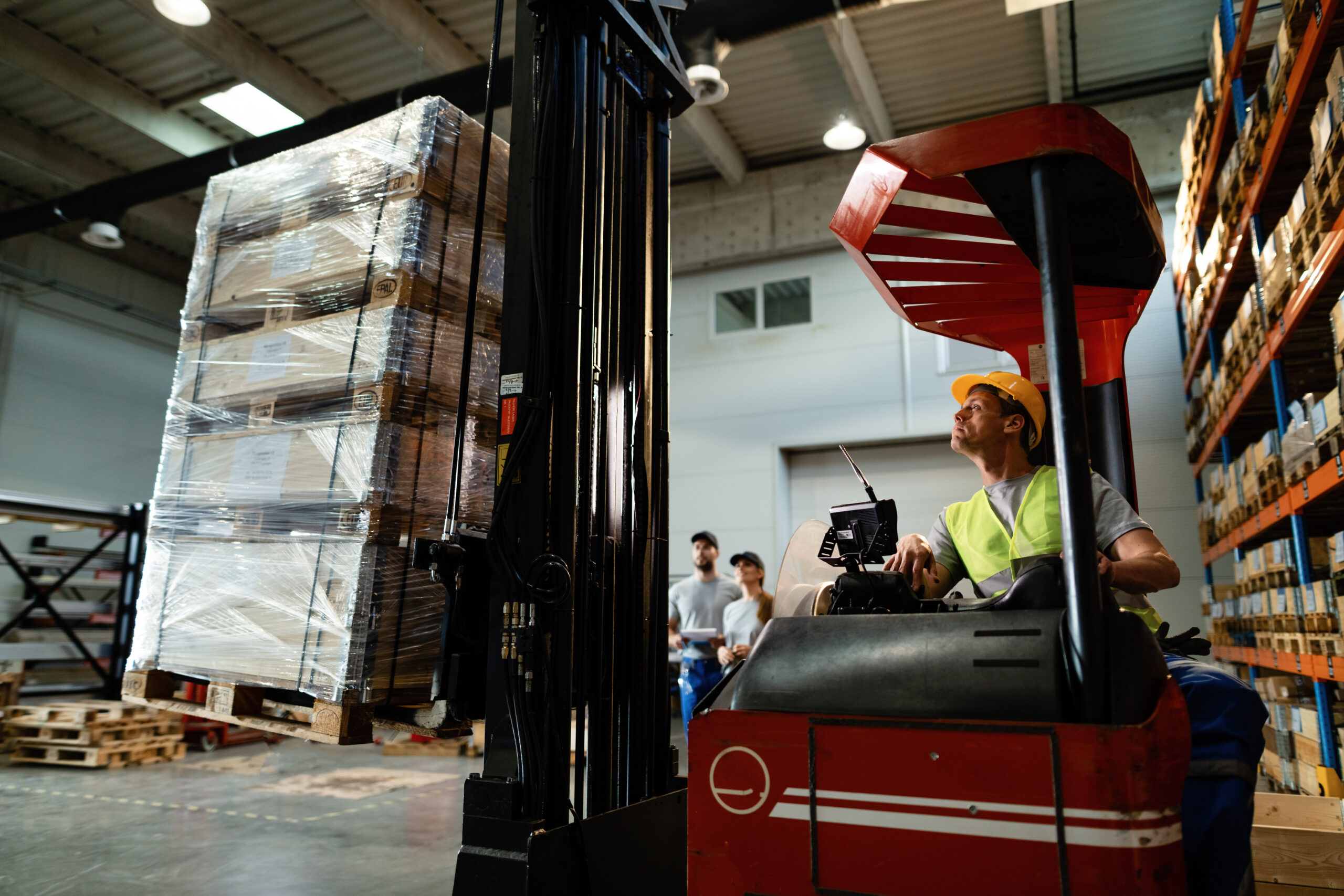
The greatest risk involved in moving an industrial machine usually doesn’t arise during the actual handling. It arises weeks earlier, during the preparation phase, which is either rushed or skipped entirely. The result is often the same. Production comes to a standstill, service is called, technicians wait, and in the end, a bill arrives that no one anticipated. In this article, you’ll find the most common mistakes made in practice, their typical consequences, and the approximate costs usually associated with them.
What to Check Before Planning a Move
Even before a final date is set, there are six things you need to check: access points and the entire route, floor load capacity, cable labeling, division of responsibilities, realistic timing for the entire operation, and whether calibration will be necessary after the move.
1. The machine won’t fit, and you won’t realize it until you get there
This is one of the most common—and most expensive—scenarios. The equipment arrives, the move begins, and only once on site does it become clear that the machine won’t fit. Sometimes there are just a few centimeters missing under a lintel; other times, the problem lies in a corridor turn, the width of a doorway, or cable trays above the passageway.
That’s when improvisation kicks in. The machine may need to be partially disassembled on site, or the installation opening may need to be modified. Both scenarios result in delays, extra work, and costs that weren’t included in the original plan at all. A typical consequence is a delay of one to two days in the entire project. In such cases, the approximate additional costs typically range from 20,000 to 80,000 CZK, not including any potential damage to the machine.
2. The floor cannot withstand the load that was not accounted for
Another problem usually arises once everything is already underway. On paper, the route looks fine, but during handling, it becomes clear that the floor cannot support the combined weight of the machine and the handling equipment.
This is not unusual in older warehouses. The floor’s load-bearing capacity is typically designed for normal operations, not for the exceptional point loads that occur when moving heavy equipment. This can result in cracks, localized sagging, work stoppages, or the need to call in a structural engineer. This isn’t just about the cost of repairs. There are also delays, complications along the way, and uncertainty about whether it’s even safe to continue.
3. Cables are not labeled, and no one knows exactly who is responsible for what
The machine is moved, set up, and assembly begins—only to reveal that basic organization is missing. Cables are not labeled, the documentation does not match reality, and no one has clearly designated who handles disconnection, who handles reconnection, and who handles commissioning.
At first, it doesn’t seem like a big problem, but it can very quickly add up to extra hours or days. Documentation is searched for, the manufacturer’s technician is called, an appointment is awaited, and production comes to a standstill in the meantime. Service costs and delays in these cases typically range from 10,000 to 50,000 CZK.
4. The plan counts on the weekend; reality involves delays and waiting
It usually looks simple on paper. Shutdown on Friday, relocation over the weekend, production resumes on Monday. But reality often looks different. Orders run over schedule, the machine can’t be shut down in time, the equipment arrives as planned and waits.
The crane waits, the handling equipment waits, the assembly team waits, and at the same time, the production shutdown is extended. This is one of the most expensive mistakes of all, because the costs of equipment, labor, and downtime all add up at once. Yet very often, it’s not a technical complication, but a planning error.
5. The straps are released too early and the load is not yet stable
Some damage occurs within a matter of seconds. A typical situation is when the securing straps are released just as the machine is “almost on the hook,” but the sling is not yet fully tensioned and the load is not truly stable. The entire operation comes to a halt as safety, damage to the machine, and the next steps are addressed. Such a mistake seems like a minor detail—until it happens.
6. A detail that seems harmless but brings the whole operation to a halt
In material handling, it is often not the big gestures that matter, but the technical details. All it takes is for a forklift to fail to support the entire load-bearing frame of the machine, or for a strap to run over a sharp edge without protection. At that moment, work is being performed off-center or with material that is being subjected to excessive stress.
7. Calibration is missing, and the problem only becomes apparent during production
The machine is in place, connected, and ready. At first glance, everything looks complete. But the real test comes with the first production run. With precision and CNC machines, even a trouble-free transport can alter the geometry or accuracy. The result is parts outside tolerance, complaints, further adjustments, and often an urgent service call that should have been planned from the start. Calibration after relocation is therefore not an extra step.
Overview of the Most Common Mistakes
| Error | Typical Consequence | Estimated Cost | Prevention |
|---|---|---|---|
| Unchecked openings | On-site dismantling, modification of the opening, 1–2 days of delay | CZK 20,000–80,000 | Survey the entire route, including the lowest and narrowest points |
| Unverified floor load capacity | Floor damage, structural engineer intervention, restricted access | Tens of thousands of CZK | Verify the load capacity of the hall, the route, and the installation points |
| Unmarked cables and components | Delays during installation, need for service | CZK 10,000–50,000 | Label cabling and connectors and take photos |
| Unclear responsibilities | Chaos during disconnection, installation, and wiring | Hours to days of delay | Assign roles in advance and confirm responsibilities |
| Poor timing | Idle equipment, extended production downtime | Thousands of CZK per hour + production downtime | Coordinate production, equipment, crane, and service schedules |
| Premature release of securing | Machine tipping or falling | Tens to hundreds of thousands of CZK | Release only when the load is fully stable |
| Short forks or unprotected straps | Machine shift, strap rupture, accident | Often hundreds of thousands of CZK | Use the correct equipment and edge protection |
| Missed calibration | Production out of tolerance, complaints, service | Tens of thousands of CZK | Schedule calibration as part of the move |
The amounts listed are approximate. The actual cost depends on the type of machine, its weight, the installation site, the complexity of the move, and the availability of service.
How we proceed when moving a machine
A well-managed move does not begin on the day of loading. It begins with preparation. First, we verify the machine’s dimensions, the route of the move, critical points, and the method of handling. We take into account passageways, height limits, access to the hall, and floor load capacity.
During the move itself, we oversee the safe loading, transport, and unloading processes. We ensure the stability of the load, the correct choice of handling equipment, the protection of sensitive machine parts, and the coordination of all involved professionals. After the move, we handle the machine’s installation in place, connection to utilities, and readiness for restart.
FREQUENTLY ASKED QUESTIONS (FAQ):
How can I tell if a machine moving company is truly experienced?
An experienced company doesn’t start with a price quote, but with questions. They want to know the machine’s dimensions and weight, the route of the move, the type of facility, access points, connection methods, and any operational limitations. Ideally, they will also inspect the site in person. If you receive a quote without a site survey or detailed technical specifications, that’s a red flag.
Is it necessary to disassemble the machine before moving it?
Not always. It depends on the dimensions, construction, route, and handling options. For many machines, disassembly is not necessary if they can be safely transported as a whole. It is not just the size of the machine itself that matters, but the entire process from disassembly to final installation.
Who is liable for damage during machine relocation?
The company performing the relocation is usually liable for damage incurred during handling, provided it is properly covered by contract and insurance. Before the move begins, it is therefore wise to verify the insurance coverage limit and exactly what the policy covers.
Is calibration necessary after the move?
For precision and CNC machines, calibration after the move is very often recommended, and it makes sense to plan it right from the start as part of the entire operation. The move can affect the machine’s geometry and accuracy, even if it does not appear damaged at first glance.